


About mouthpiece orthodontics

A transparent orthodontic treatment that is less noticeable
Mouthpiece orthodontics is a method of aligning teeth by wearing transparent mouthpieces, and is recommended for people who are concerned about the appearance of orthodontic appliances or who have metal allergies. Since they can be easily removed at any time, they have little impact on eating and brushing, helping you maintain a hygienic oral environment. Also, before treatment begins, we can simulate how the teeth will move, so you can proceed with treatment with peace of mind.
Please consult us in the following cases
- Concerned about the appearance of orthodontic appliances
- Want to undergo orthodontic treatment hygienically
- Have a metal allergy
- Want to straighten teeth without others noticing
- It is difficult to visit the clinic frequently
- Worried that orthodontic treatment will be painful
Our mouthpiece orthodontics

Highly precise treatment using dental CT and an intraoral scanner
At our clinic, we provide highly precise treatment by introducing equipment such as dental CT and an intraoral scanner (iTero). Using dental CT for 3D cephalometric analysis makes it possible to accurately understand the condition of the teeth and bones. Also, the intraoral scanner enables digital dental impressions. We have created an environment where we can provide highly precise treatment while reducing the burden on patients.

Mouthpiece orthodontics
Treatment planning based on experience
Our dentists have been involved in many mouthpiece orthodontic treatments within the group. Drawing on that experience, we propose treatment plans suited to each patient’s teeth alignment. From a professional standpoint, we provide appropriate treatment to help make your teeth beautiful and well aligned.
Free consultation for mouthpiece orthodontics
You can start after checking tooth movement with a 3D simulation.
Mouthpiece orthodontics
Benefits

Transparent and less noticeable
We use transparent mouthpiece-type orthodontic appliances, so they are hardly noticeable in appearance.

Removable
They can be removed at any time, so they do not affect daily activities such as eating and brushing your teeth.

Less pain
Because the teeth are moved gradually using dozens of mouthpieces, it is said to cause less pain than wire braces (individual experiences vary).

Fewer clinic visits
Since several mouthpieces are given to you at once, treatment is possible with fewer clinic visits compared with regular wire braces.

OK even if you have a metal allergy
Because mouthpieces are made of plastic, even people with metal allergies can use them with peace of mind.

A large number of treatment cases worldwide
About 9 million people (as of March 2021) have used them, and treatment plans can be made based on a large amount of case data.
Types of mouthpiece orthodontics

ClearLine
This mouthpiece orthodontic treatment is designed for mild crookedness of the front teeth. Because fewer teeth are targeted, the treatment period is shorter and the financial burden can also be kept down. If you are concerned about mild crookedness of the front teeth, please consult us. The cost is self-pay treatment (not covered by insurance), and the standard fee is as shown in the price list below.

Invisalign
It covers overall teeth alignment, including the back teeth, and can treat protruding teeth, underbite, and severe cases that require tooth extraction. The orthodontic period takes about the same amount of time as conventional wire braces, but because there is no limit to the number of mouthpieces, it is possible to continue until you are satisfied. We also support the use of OrthoPulse for those who want to speed up orthodontic treatment.

ClearCorrect
This mouthpiece orthodontic treatment is provided by the Straumann Group, which has a high level of trust in the dental industry, and can address a wide range of cases, including protruding teeth and crowding. In cases of underbite, only mild cases are supported. Using dedicated software, dental arch data and CT images are combined to design precise mouthpieces and aim for ideal alignment.
Also supports speed orthodontics

OrthoPulse
Using it for about 10 minutes a day can shorten the treatment period. By shining light on cells whose movement weakens during dental treatment, their activity is stimulated and the speed of tooth movement can be increased.

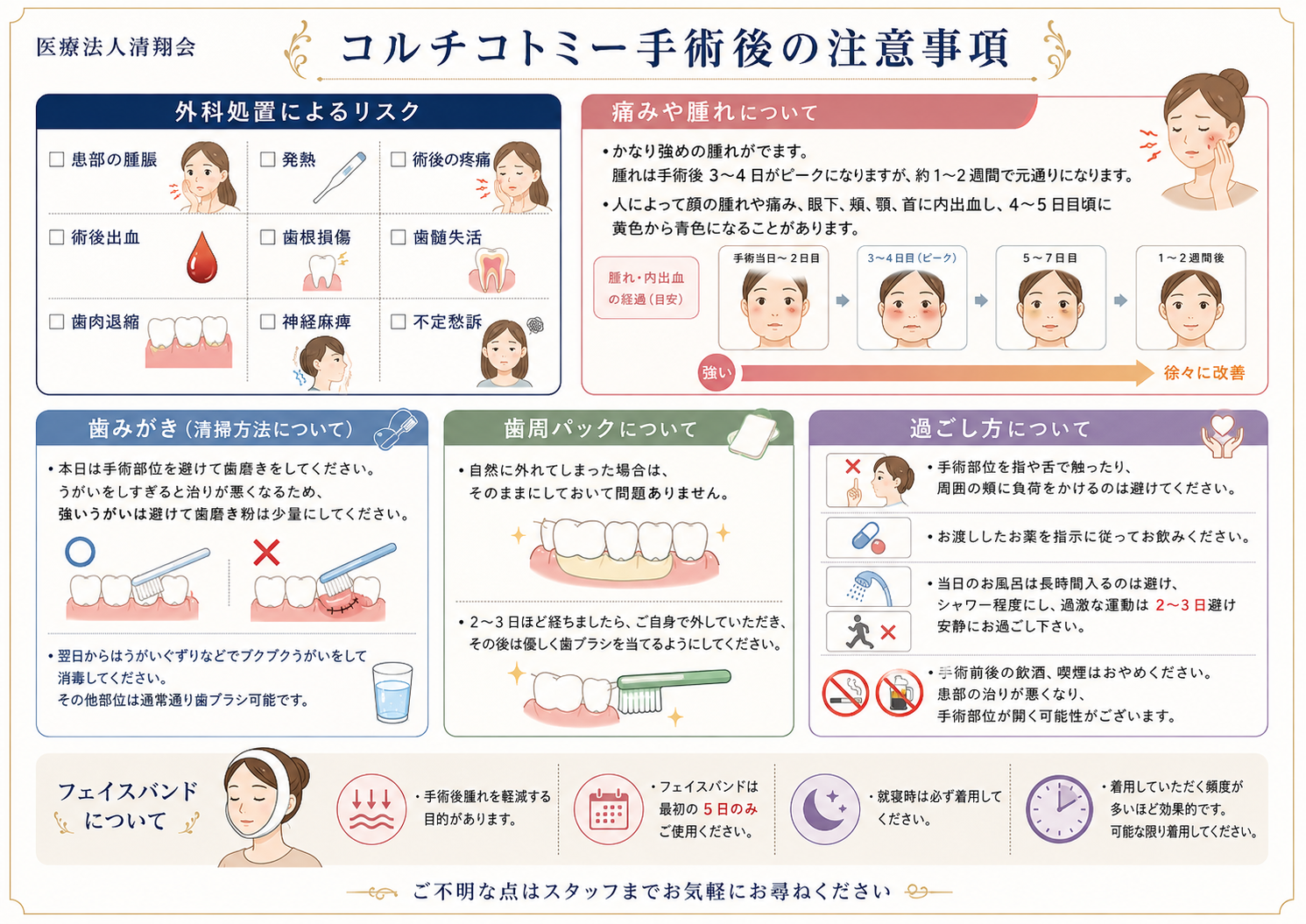
Sutani Method Corticotomy
This is an orthodontic treatment method that can speed up tooth movement by making grooves in the jawbone through surgery. Not only does it speed up orthodontic treatment, but in cases that would have required tooth extraction, there is also the possibility of avoiding extraction, which is a major benefit.
Invisalign is
a treatment device not covered by the Pharmaceuticals and Medical Devices Act
Invisalign is a trademark of Align Technology, Inc. in the United States, and
the mouthpiece orthodontic appliance is manufactured at an overseas factory.
Because it is a device manufactured for each individual patient, and
because of manufacturing overseas and other reasons, it is a medical device that has not been approved under Japan's Act on Securing Quality, Efficacy and Safety of Products Including Pharmaceuticals and Medical Devices (the Pharmaceuticals and Medical Devices Act) (for details, please see the explanation at the bottom of this page).
Treatment process

- 1 First consultation
- We provide careful counseling while discussing treatment methods, costs, and any concerns you may have. We will answer your questions thoroughly so that you can begin treatment with no worries at all, so please feel free to ask anything.
Consideration of implementation
Up to this point, the consultation is free of charge.

- 2 Detailed examination
- We begin with an examination of the inside of the mouth for cavities and periodontal disease, and also take X-rays and scan your teeth alignment with an intraoral scanner.

- 3 Simulation
- Based on the scanned dental alignment, we perform a detailed check of the alignment as determined necessary by the doctor and create a 3D simulation.

- 4 Treatment plan proposal
- Based on the results of the 3D simulation, we will explain the treatment plan, including how long it will take and how the teeth will change. If you agree, we will make the mouthpieces. There is a production period, so treatment will begin once they are ready.

- 5 Start of orthodontic treatment
- Please wear the mouthpiece except during meals and brushing, and proceed with treatment. You will come in for maintenance about once every two months, including when you receive the mouthpiece.

- 6 Retention period
- Once you have finished using the mouthpieces and achieved your ideal alignment, orthodontic treatment is complete. After the orthodontic period ends, you will be asked to wear a retainer (a device to prevent relapse) for a while.
Fee
ClearLine Fee Plan
Per-Visit Pack Plan
- Recommended for people who
-
- need mild to moderate orthodontic treatment
- want to correct relapse after orthodontic treatment
Estimated treatment period1 to 2 months
1210,000 yen(tax included)
Estimated treatment period2 to 4 months
2310,000 yen(tax included)
Estimated treatment period3 to 6 months
3410,000 yen(tax included)
Estimated treatment period6 to 12 months
4510,000 yen(tax included)
Flat-Rate Pack Plan
- Recommended for people who
-
- need moderate to severe orthodontic treatment
- want to have treatment thoroughly without worrying about cost
6610,000 yen(tax included)
5year
unlimited
Included in the flat-rate plan
・Resetup
・Retainer (mouthpiece to prevent relapse)
- Resetup: If treatment is interrupted or the treatment plan is changed for any reason, the treatment plan and mouthpiece can be remade.
- Retainer: a mouthpiece used to prevent relapse after orthodontic treatment. In the recommended flat-rate plan, up to two sets of retainers are free within six months.
- With the flat-rate plan, you can continue visiting for five years according to the progress of orthodontic treatment.
Other Fee Schedule
| Type | Fee | ||
|---|---|---|---|
| ClearLine orthodontics | 1st | one jaw | 16,500 yen |
| both jaws | 27,500 yen | ||
| 2nd | one jaw | 38,500 yen | |
| both jaws | 49,500 yen | ||
| Invisalign orthodontics | Invisalign・ Lite |
front 6 teeth | 385,000 yen |
| front 12 teeth | 660,000 yen | ||
| Invisalign Full | 770,000 yen | ||
| Speed Orthodontics | OrthoPulse | 220,000 yen | |
| Kotani method Corticotomy |
one jaw | 440,000 yen | |
| both jaws | 660,000 yen | ||
| Examination fee | 33,000 yen | ||
| Adjustment fee | 5,500 yen | ||
*All displayed prices include tax.
*Not covered by insurance
Payment methods
At Nagoya Chaya Dental & Orthodontic Clinic,
the following payment methods are available.

Cash
Payment in cash

Bank transfer
Payment by bank transfer

Credit card
*Self-pay treatment only
VISA/JCB/
Mastercard, etc.

Dental loan
Payment in low-interest installments
payment
Notes, risks, and side effects
Frequently asked questions about mouthpiece orthodontics
Q. How long should I wear the mouthpiece each day?
A. Basically, you should wear it except during meals and brushing your teeth. If the wearing time is too short, the teeth may not move as planned.
Q. What is the difference between ClearLine and Invisalign?
A. ClearLine is a method focused on mild crookedness of the front teeth and relapse, while Invisalign is a method that can be used for overall teeth alignment, including the back teeth. We will suggest which is more suitable after examination.
Q. How often are visits?
A. Including the handover of the mouthpiece, you will visit us about once every two months. We also provide treatment on Saturdays and Sundays.
Q. Can I see an image of the final result before treatment?
A. We create a 3D simulation from the data scanned with the intraoral scanner (iTero) and explain tooth movement and the treatment plan.
Q. Is there a way to shorten the treatment period?
A. There is OrthoPulse, which uses light to encourage tooth movement (220,000 yen), and Sutani Method corticotomy (440,000 yen for one jaw, 660,000 yen for both jaws). Both are self-pay treatment (not covered by insurance), and suitability is determined after examination.
Q. Is mouthpiece orthodontics painful?
A. For the first few days after switching to a new mouthpiece, you may feel tightness. The sensation varies from person to person.
Q. What do I do when eating?
A. Remove the mouthpiece, eat, brush your teeth, and then put it back on.
Q. Can mouthpiece orthodontics be used for any teeth alignment?
A. Depending on the alignment, wire braces may be more suitable. We will explain the appropriate method after examination.
For other questions, Frequently Asked Questions see here.
For those who want to know more
Treatment methods, flow, period, risks, and frequently asked questions are explained in detail in the "Treatment Guide" of Seishokai Medical Corporation and Seishokai Medical Corporation.
*The Invisalign appliance is a medical device that has not been approved under the Act on Securing Quality, Efficacy and Safety of Products Including Pharmaceuticals and Medical Devices (PMD Act). At our clinic, we order and use appliances from Align Technology in the United States under the responsibility of our dentists. In Japan, there are also mouthpiece-type orthodontic appliances that have been approved. Invisalign is approved by the U.S. FDA and is used in many countries. Because it is an unapproved medical device, even if a serious side effect were to occur, it would not be covered by the national Relief System for Adverse Drug Reactions and Injuries.
*The Clear Correct appliance is a medical device that has not been approved under the Act on Securing Quality, Efficacy and Safety of Products Including Pharmaceuticals and Medical Devices (Pharmaceuticals and Medical Devices Act). The appliance from ClearCorrect, Inc. in the United States (Straumann Group) is ordered and used under the responsibility of a dentist. In Japan, there are also some approved clear aligner orthodontic appliances. Clear Correct is authorized by the U.S. FDA. Because it is an unapproved medical device, if serious side effects were to occur, it would not be covered by the national relief system for drug-induced adverse reactions.